Artificial intelligence has quickly become the center of business, research, and everyday problem solving. Among the most talked about tools are ChatGPT by OpenAI and Perplexity AI, a platform designed for information discovery. Both tools are powerful, but many users argue that in certain areas, Perplexity is better than ChatGPT. To understand why, we need to look closely at what each system does and where their strengths lie.
ChatGPT at a glance
ChatGPT is a conversational AI built to generate text, hold discussions, answer questions, and assist with tasks such as coding or writing. It excels in natural language processing, creative content, and smooth conversation flow. Businesses use ChatGPT for customer support, blog writing, brainstorming, and coding assistance.
Its biggest advantage is flexibility. It can role play, explain complex topics in simple language, and even produce long form essays that sound natural.
Perplexity AI at a glance
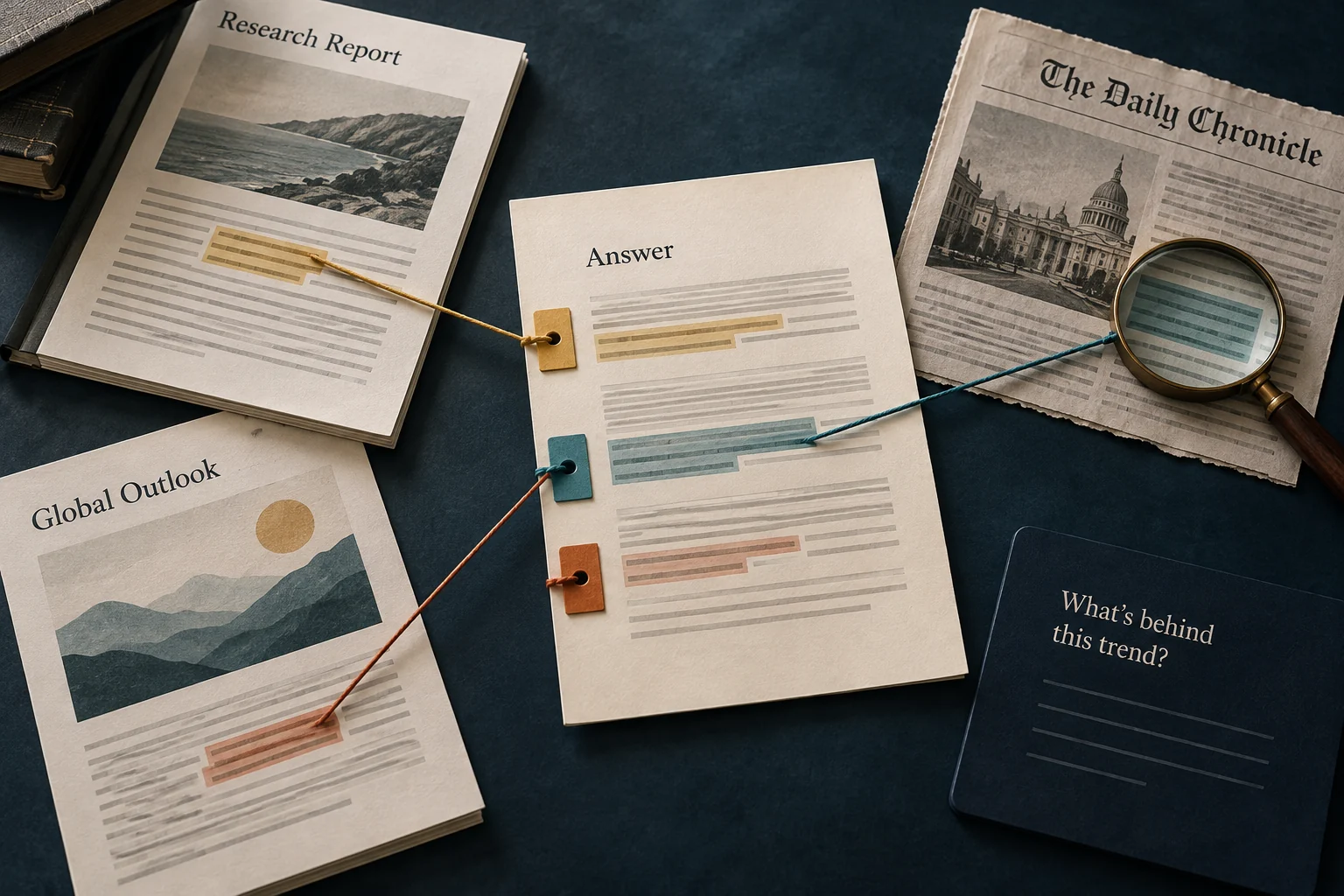
Perplexity AI is designed primarily as a search and answer engine. It combines natural language processing with real time web access. Instead of only generating text, it pulls live information from reliable sources and provides citations to back up its responses.
This makes it especially useful for research, fact checking, and knowledge discovery. Where ChatGPT provides conversation, Perplexity focuses on accuracy and traceability.
Why some people find Perplexity better
1. Real time knowledge
One of the biggest differences is that Perplexity connects directly to the internet. When you ask a question, it searches live sources and gives an answer supported by citations. ChatGPT, unless connected to plugins or special modes, works from a trained dataset that can become outdated.
For users who need current news, market updates, or fast moving research, Perplexity offers more reliability.
2. Cited sources
Perplexity always shows where its information comes from. Each answer is backed by references and clickable links to articles, journals, or websites. This creates transparency and allows users to check credibility themselves.
ChatGPT, while excellent at producing fluent text, sometimes delivers confident answers without sources. For academic work, journalism, or business analysis, Perplexity’s approach feels safer.
3. Accuracy in factual questions
Because it pulls information directly from the web, Perplexity tends to be more accurate on fact based questions. For example, if you ask about the latest company earnings or a new scientific discovery, it will point to published reports.
ChatGPT is strong at reasoning and summarizing but may occasionally generate outdated or incorrect details if it relies only on training data.
4. Simplicity of use
Perplexity has a clean design focused on questions and answers. You ask, it answers with references. ChatGPT, on the other hand, is more of a multi purpose assistant that can take longer conversations and adapt to different roles.
Some users prefer Perplexity’s straightforward format because it saves time and avoids unnecessary conversation when the goal is quick research.
5. Research focused features
Perplexity is optimized for exploration. It suggests follow up questions, organizes knowledge into clear summaries, and encourages deeper discovery through linked sources. It feels closer to a modern search engine than a chatbot.
For students, professionals, and researchers, this focus makes it better suited for fact driven tasks.
Where ChatGPT is still stronger
It would not be fair to say Perplexity is better in every way. ChatGPT has its own clear strengths:
- Creative writing: Blog posts, stories, and marketing copy flow more naturally
- Conversational ability: Holds context over long discussions and adapts tone
- Problem solving: Handles coding, logical reasoning, and brainstorming with more flexibility
- Business integrations: Through APIs and plugins, it connects to workflows and tools
If your need is less about facts and more about ideas, ChatGPT is usually the better choice.
The verdict
So, is Perplexity better than ChatGPT? The answer depends on the situation.
- For real time knowledge, citations, and factual accuracy, Perplexity is often the better option
- For creativity, conversation, and problem solving, ChatGPT remains ahead
In truth, both tools complement each other. A researcher might use Perplexity to gather accurate sources, then use ChatGPT to summarize those findings into a presentation or narrative.
Conclusion
Perplexity and ChatGPT represent two different strengths in artificial intelligence. Perplexity shines in research, accuracy, and citations, while ChatGPT excels in conversation, creativity, and reasoning. Calling one better than the other depends entirely on what you value more.
For businesses and individuals, the smartest approach may be to use both, Perplexity for trusted data and ChatGPT for making that data engaging and useful.
Want to explore how advanced AI solutions like ChatGPT and Perplexity can support your business?
Reach out to TechGenies LLC for tailored AI advisory and integration services that help you harness the best of modern tools.