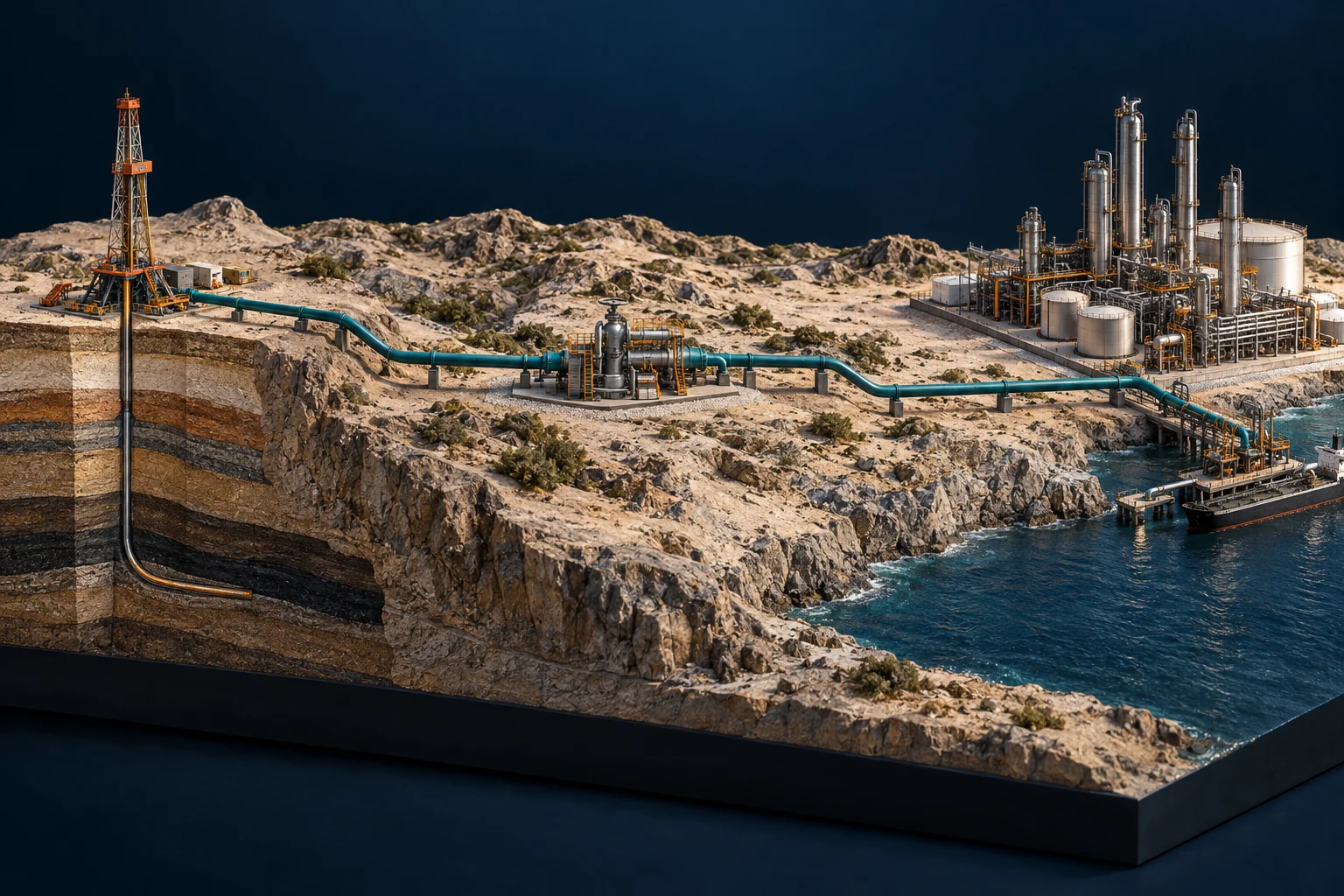
Introduction: The AI Revolution in the Energy Sector
Artificial Intelligence is reshaping the oil and gas industry. Rising overhead costs, fluctuating resource availability, stricter decarbonization mandates such as the EU taxonomy, and growing operational risks are accelerating digital transformation across the value chain.
AI in oil and gas typically refers to predictive analytics, machine learning algorithms, and intelligent optimization tools integrated within Energy Management Systems and SCADA platforms. These systems shift operations from passive monitoring to active optimization.
The strategic advantage is clear. AI-driven optimization delivers a triple win: reduced operational costs, improved reliability, and enhanced regulatory compliance.
Upstream: Optimizing Exploration and Remote Power Systems
Upstream operations often take place in remote or off-grid environments where energy stability is mission critical.
Hybrid Power at Remote Sites
Many upstream facilities rely on hybrid systems combining photovoltaic panels, diesel generators, and Battery Energy Storage Systems. Managing these energy sources manually leads to inefficiencies and higher fuel consumption.
AI-based Energy Management Systems act as the operational brain. The system prioritizes renewable charging of batteries and activates diesel generators only when storage capacity reaches defined thresholds. This reduces fuel dependency and operational costs.
Edge Computing for Real-Time Control
Edge computing processes AI workloads closer to field sensors and wellhead equipment. This reduces latency and improves response times.
Organizations implementing edge-enabled AI systems have reported up to 30 percent improvement in renewable energy utilization at remote production sites.
Battery State of Health Monitoring
AI continuously monitors battery parameters such as temperature, voltage, and discharge cycles. Preventing overcharging and deep discharging preserves battery lifespan and reduces replacement costs in isolated environments.
Upstream AI adoption enhances energy stability, lowers fuel costs, and extends critical asset life.
Midstream: Intelligent Pipeline Management and Infrastructure Safety
Midstream operations involve complex pipeline networks and storage facilities where reliability is paramount.
SCADA and AI Integration
Traditional SCADA systems monitor pressure, flow rates, and equipment status across pipeline infrastructure. Integrating AI-based Energy Management Systems introduces predictive intelligence.
AI analyzes operational patterns to detect anomalies before they escalate into failures.
Predictive Maintenance for Pipeline Infrastructure
Machine learning models identify power quality risks, mechanical stress signals, and unusual flow behavior. Early detection prevents equipment breakdowns and environmental incidents.
AI-driven predictive maintenance reduces unplanned downtime and minimizes costly emergency repairs.
Fault Detection and Diagnostics
AI algorithms process vast sensor datasets to tag irregular patterns and detect potential leaks. Automated Fault Detection and Diagnostics reduce reliance on manual inspections and save significant manpower hours.
Midstream AI deployment strengthens safety, compliance, and infrastructure resilience.
By advancing oil and gas transformation through scalable IoT platforms, midstream operators can enhance real-time visibility, optimize asset performance, and build resilient, data-driven infrastructure for safer and more efficient operations.
Downstream: Refining, Distribution, and Power Optimization
Downstream operations include refineries, power stations, and distribution hubs where energy intensity is high.
Refinery Efficiency and ISO 50001
AI-driven Energy Management Systems enable refineries to follow the Plan-Do-Check-Act cycle defined by ISO 50001. Continuous performance monitoring and optimization ensure measurable energy efficiency improvements.
AI forecasting models optimize steam generation, fuel gas usage, and electricity distribution across refining processes.
Thermal Power Station Efficiency
The Dahanu Thermal Power Station in India implemented structured energy management practices and achieved annual savings of approximately USD 1.7 million through improved monitoring and operational optimization.
Distribution Center Optimization
Volkswagen’s Autostadt distribution hub implemented integrated building and energy intelligence systems and achieved 41 percent annual energy savings while reducing CO2 emissions by 460 tons per year.
Managing Peak Demand Charges
Downstream facilities often face significant peak demand penalties. In some cases, peak demand charges represent up to 50 percent of the total electricity bill.
AI-based demand forecasting predicts peak periods in advance. Energy Management Systems respond by shifting loads or discharging stored energy, significantly lowering peak charges.
Downstream AI adoption drives cost efficiency and environmental performance improvements.
Cross-Sector AI Functionalities: The Technical Enablers
AI success across the oil and gas value chain relies on enabling technologies.
Forecast-Based Systems
Predictive analytics anticipates future energy demand and market price fluctuations. Accurate forecasting improves procurement strategies and stabilizes operating expenses in volatile markets.
Digital Twins and Simulation
Digital twin technologies simulate thermal, mechanical, and fluid systems before implementation. Simulation tools allow engineers to test operational scenarios without physical disruption.
Advanced Metering Infrastructure
Smart meters generate granular consumption data across industrial circuits. AI processes this data to identify inefficiencies, optimize load distribution, and reduce energy waste.
These technical enablers form the backbone of AI-driven industrial optimization.
Overcoming Barriers to AI Implementation
Despite strong benefits, AI deployment presents challenges.
Data Security
Oil and gas facilities manage commercially sensitive information. Robust cybersecurity frameworks and encrypted communication protocols ensure safe data exchange across stakeholders.
Standardization
Unified measurement and verification procedures are essential to ensure consistent performance tracking across facilities.
Financial Return on Investment
Modern AI and Energy Management configurations are designed to achieve payback periods within three to five years. Clear ROI modeling accelerates executive approval and investment decisions.
Strategic planning mitigates implementation risks and maximizes value realization.
Conclusion: Future-Proofing the Oil and Gas Value Chain
Artificial Intelligence transforms oil and gas operations across upstream, midstream, and downstream segments. From optimizing hybrid power at remote drilling sites to enhancing refinery efficiency and intelligent pipeline monitoring, AI converts energy from a static cost center into a performance driver.
Successful implementation marks a major milestone in sustainable resource management and industrial operational excellence. Organizations that embrace AI-driven optimization position themselves for long-term resilience, profitability, and regulatory compliance.
The future of oil and gas belongs to intelligent infrastructure.
Ready to Transform Your Oil and Gas Operations with AI?
TechGenies delivers AI-driven Energy Management Systems, predictive analytics, and digital transformation solutions tailored for oil and gas environments. Our experts help organizations reduce costs, improve operational reliability, and accelerate sustainable performance across the entire value chain.
Start building intelligent infrastructure today.
Contact Us Today TechGenies