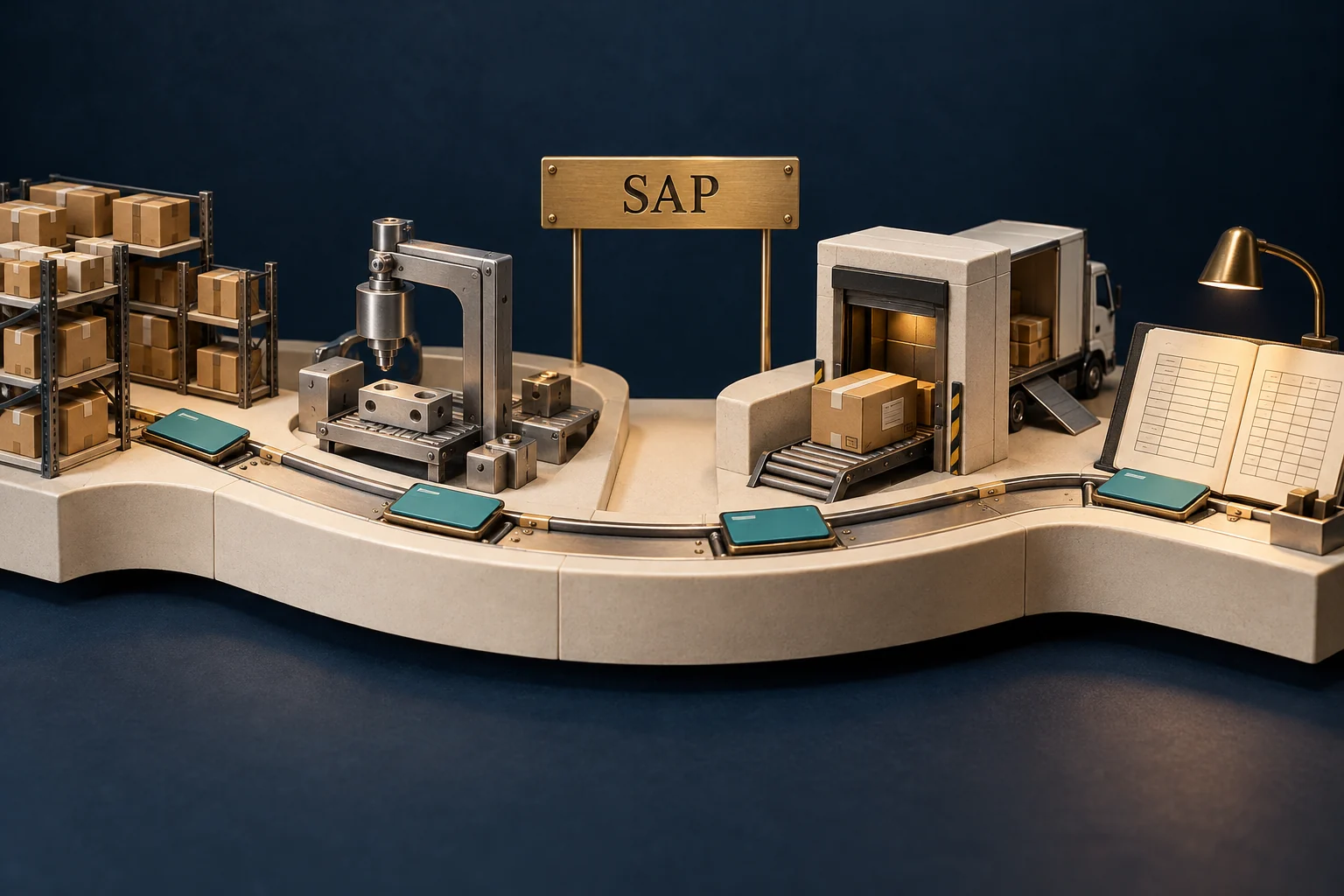
When businesses think about digital transformation, one of the first names that comes to mind is SAP. Short for Systems, Applications, and Products in Data Processing, SAP is a global leader in enterprise software. From startups to Fortune 500 companies, organizations across industries use SAP to simplify processes, improve decision making, and unlock new opportunities for growth.
But what exactly is SAP used for, and why has it become so essential to modern business operations? Let us explore the many ways SAP helps companies operate more efficiently, serve customers better, and stay competitive.
Understanding SAP at its core
At its foundation, SAP is an enterprise resource planning (ERP) platform. This means it connects multiple business functions into one integrated system. Instead of running separate tools for finance, HR, supply chain, or sales, SAP centralizes everything so data flows seamlessly across departments.
For example, a sales order placed in SAP can automatically update inventory in supply chain, trigger production in manufacturing, and reflect revenue in finance all in real time. This level of integration saves time, reduces errors, and improves visibility across the entire organization.
1. Enterprise resource planning (ERP)
The most common use of SAP is ERP. Businesses rely on it to unify their operations under a single system. ERP in SAP covers:
- Finance: managing accounts, budgets, and compliance
- HR: payroll, hiring, performance management
- Procurement: purchasing and vendor management
- Supply chain: inventory, logistics, and production planning
With ERP, companies no longer have to reconcile data from multiple systems. SAP ensures that everyone works with the same real time information, which makes operations smoother and decisions faster.
2. Finance and accounting
SAP is widely used for financial management. Companies handle tasks like accounts payable, receivable, and asset management on the platform. It also helps with closing books faster, managing risks, and meeting compliance standards across regions.
One of the major advantages is real time financial reporting. Leaders can see current cash flow, expenses, and profitability at any moment. This gives businesses confidence in their numbers and allows them to act quickly when conditions change.
3. Human resources and people management
Managing people is just as important as managing finances. SAP offers tools like SAP SuccessFactors, which support the entire employee lifecycle.
With SAP, HR teams can:
- Post jobs and recruit talent
- Onboard new employees
- Manage payroll and benefits
- Conduct performance reviews
- Provide training and development programs
By automating repetitive HR tasks, SAP frees up time for HR leaders to focus on employee engagement, culture, and strategy. Many companies also combine SAP with Fractional Advisory to get expert guidance on structuring HR processes effectively.
4. Supply chain and manufacturing
For companies that produce or deliver goods, SAP plays a critical role in supply chain and manufacturing. It provides tools for demand forecasting, production scheduling, inventory management, and logistics tracking.
For example, a manufacturer can use SAP to ensure raw materials are available before production starts, track items as they move through the warehouse, and schedule deliveries to customers. This level of control reduces waste, lowers costs, and improves customer satisfaction.
5. Customer relationship management (CRM)
Customer expectations are higher than ever, and SAP helps businesses meet them. Its CRM solutions give companies a complete view of each customer, including past purchases, interactions, and preferences.
With this information, businesses can:
- Personalize services and offers
- Anticipate customer needs
- Improve retention with proactive support
- Strengthen long term loyalty
By combining CRM with other SAP modules, companies can deliver seamless experiences across sales, service, and marketing.
6. Data analytics and reporting
Modern businesses generate vast amounts of data, and SAP helps turn that raw data into insights. Tools like SAP Analytics Cloud provide dashboards and reports that highlight key performance indicators.
Executives can see which products are performing best, which regions are growing, and which processes need improvement. Predictive analytics powered by AI and machine learning also allow businesses to anticipate future trends and act before challenges arise.
7. Industry specific solutions
Another strength of SAP is its industry focus. Beyond standard ERP and analytics, SAP offers tailored solutions for industries such as:
- Healthcare: patient data management and compliance
- Retail: point of sale and customer insights
- Finance: risk and compliance monitoring
- Energy: asset management and sustainability tracking
- Public sector: citizen services and government budgeting
These industry solutions make SAP more relevant and practical, addressing unique requirements that generic software cannot solve.
Why businesses rely on SAP
So why do companies continue to invest in SAP year after year? The reasons are clear:
- Integration: By unifying multiple business processes, SAP reduces silos and duplication
- Scalability: Whether a company has 50 employees or 50,000, SAP can adapt
- Compliance: Built in support for international regulations keeps businesses audit ready
- Innovation: SAP constantly invests in cloud technology, AI, and automation to future proof businesses
These benefits help organizations operate more efficiently and innovate with confidence.
Real world applications of SAP
To make it concrete, here are a few real world scenarios where SAP proves its value:
- A global retailer uses SAP to track sales and manage inventory across hundreds of stores in real time.
- A manufacturer relies on SAP to coordinate production schedules with supplier deliveries to avoid costly delays.
- A bank uses SAP to handle complex compliance reporting across multiple countries.
- A healthcare provider uses SAP to manage patient data securely while meeting strict privacy regulations.
These examples show how SAP adapts to the unique needs of different industries.
Challenges of using SAP
While SAP is powerful, it is not without challenges. Implementation can be complex, requiring time, training, and investment. Customization may also add complexity if not managed carefully. However, with the right partner and planning, these challenges are outweighed by the long term benefits of efficiency and integration.
The future of SAP
Looking ahead, SAP is focusing on cloud based solutions, AI integration, and sustainability. The move to cloud gives businesses more flexibility and lower upfront costs. AI enhances automation and insights, while sustainability tools help organizations track and reduce their environmental impact.
Cloud solutions also align with modern IT strategies, and companies often combine SAP with expert cloud infrastructure services to maximize value.
Conclusion
SAP is used for much more than enterprise resource planning. It powers finance, HR, supply chains, customer engagement, and analytics, while also offering industry specific solutions. For businesses that want to grow and compete, SAP provides a strong foundation of integration, innovation, and scalability.
Whether a company is small and growing or large and global, SAP helps it run better and smarter.
Want to explore how enterprise solutions like SAP can accelerate your digital transformation?
Reach out to TechGenies LLC for tailored advisory and implementation support that connects technology to business goals.