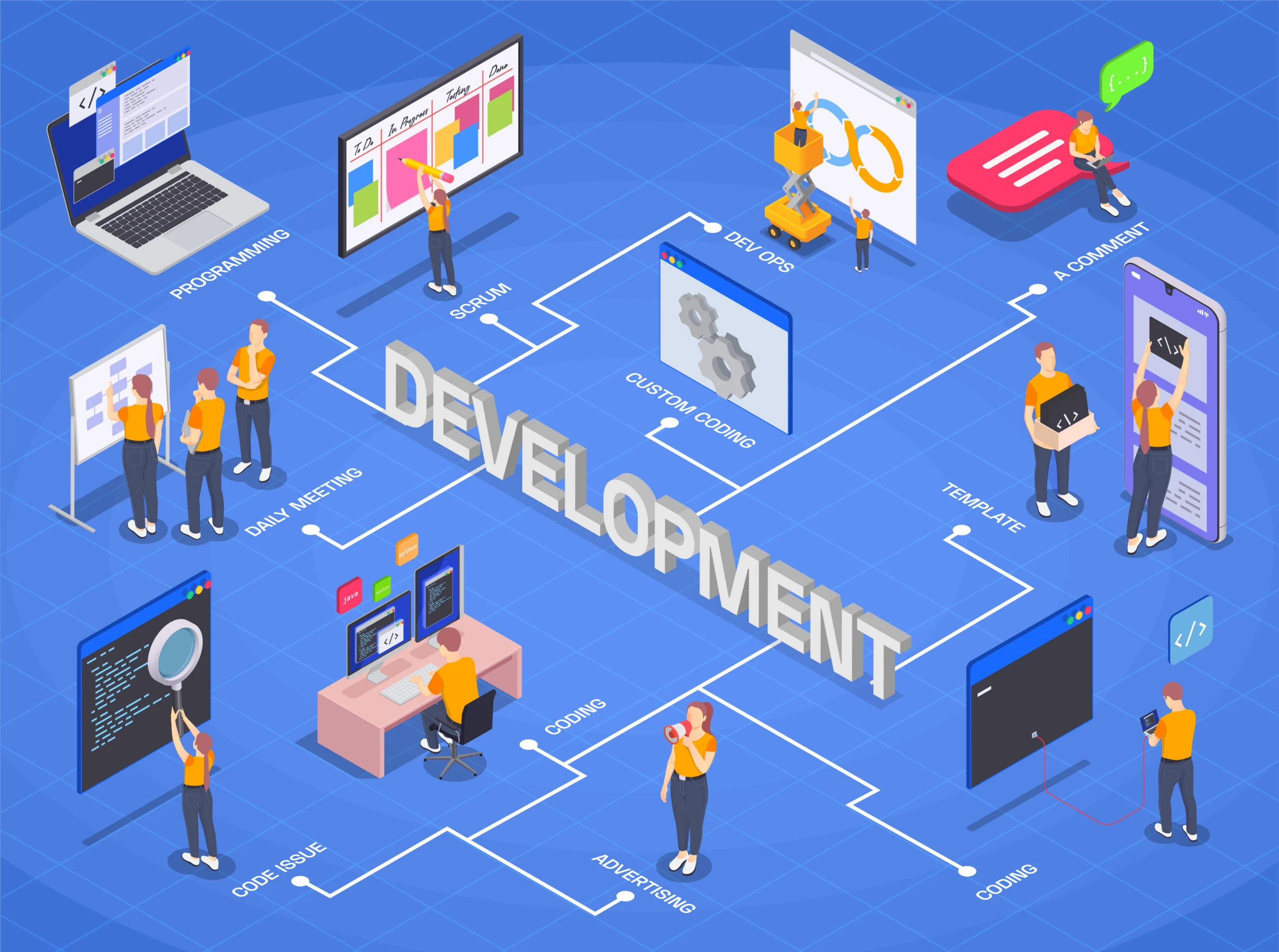
Custom software development has evolved far beyond simply coding applications. It has become a strategic enabler of digital transformation, data intelligence, and business agility. As we move toward 2026, the pace of innovation continues to accelerate, driven by artificial intelligence, automation, and the growing need for scalable, secure, and hyper personalized digital solutions.
Organizations worldwide are investing in tailored software that meets unique operational needs, enhances efficiency, and enables better decision-making. But what will shape the future of custom software development in the next two years?
This article explores the key trends to watch in 2026, backed by expert insights and emerging technological shifts that are redefining how businesses build, deploy, and scale software.
The Evolving Landscape of Custom Software Development
In the past, software development focused primarily on functionality and speed. Today, the emphasis has shifted to intelligence, integration, and user experience. Businesses no longer want just apps, they want smart, adaptable ecosystems.
According to insights shared by Fegno, the coming years will see a rapid rise in intelligent automation, low-code frameworks, and cloud-native systems. These technologies are expected to shorten delivery cycles, improve security, and reduce development costs while keeping products future-proof.
The developers of tomorrow won’t just write code, they’ll design experiences, train algorithms, and collaborate closely with AI powered tools.
1. Artificial Intelligence Becomes the Core of Development
AI is no longer a support tool; it’s becoming the foundation of modern software development. By 2026, AI-driven development will influence everything from planning to testing and deployment.
Key Impacts of AI on Custom Development
- AI-Powered Coding Assistants: Developers will use AI tools like GitHub Copilot or ChatGPT-based assistants to generate, optimize, and debug code faster.
- Predictive Project Management: Machine learning will forecast project delays, resource needs, and risks before they occur.
- Smart Testing and QA: AI algorithms will automate repetitive test cycles and identify vulnerabilities early.
- Personalized Applications: Businesses will use AI to analyze user behavior and deliver hyper-personalized app experiences.
Organizations looking to build AI-enabled applications can leverage services like data and artificial intelligence solutions offered by TechGenies to design scalable, intelligent systems that evolve with user needs.
2. Rise of Low-Code and No-Code Development
By 2026, low-code and no-code platforms will dominate the enterprise software space. These platforms enable faster app delivery using drag-and-drop interfaces and prebuilt components, allowing business users and developers to collaborate efficiently.
Why Low-Code Will Matter More Than Ever
- Speed to Market: Applications can be built in weeks instead of months.
- Cost Efficiency: Reduces reliance on large developer teams.
- Innovation Access: Non-technical professionals can participate in app creation.
However, while low code accelerates development, complex enterprise grade systems still require custom architecture. This balance is where hybrid approaches shine, combining low code flexibility with custom application development services for scalability and control.
3. The Dominance of Cloud-Native Architecture
Cloud-native applications are the future of enterprise software. In 2026, nearly all custom solutions will be built to leverage multi-cloud and hybrid infrastructures.
Why Cloud-Native is Leading the Future
- Scalability: Applications automatically scale to meet user demand.
- Resilience: Built-in redundancy ensures continuous uptime.
- Agility: Enables faster updates and deployments.
- Security: Cloud providers offer advanced threat detection and compliance features.
Enterprises adopting cloud infrastructure services can expect faster deployment, reduced infrastructure costs, and better integration with emerging technologies like AI, edge computing, and IoT.
4. AI-Driven Automation and DevOps Evolution
Automation will become the backbone of development pipelines by 2026. AI-powered DevOps (AIOps) will transform how teams monitor systems, detect issues, and deliver updates.
Key Innovations in DevOps
- Self-Healing Systems: Automated responses to bugs and outages without human intervention.
- Continuous Integration and Delivery (CI/CD): Faster, error-free releases through intelligent pipelines.
- Infrastructure as Code (IaC): Streamlined provisioning of environments for consistency and reliability.
The synergy of AI, automation, and DevOps ensures that custom applications evolve in real time, adapting to new demands with minimal downtime.
5. Greater Focus on Cybersecurity and Data Privacy
As more organizations digitize their operations, cybersecurity will remain a top priority. By 2026, data-driven software systems will require advanced protection models that combine machine learning and zero-trust frameworks.
Cybersecurity Trends Shaping 2026
- AI-Enhanced Threat Detection: Systems that learn and adapt to identify new types of attacks.
- Zero Trust Architecture: Every access point is verified and continuously monitored.
- Quantum-Resistant Encryption: Preparing systems for the future of quantum computing threats.
- Automated Compliance: Tools that ensure real-time regulatory alignment.
Companies developing secure and compliant applications should focus on early integration of security frameworks, something partners like TechGenies specialize in implementing through holistic software solutions.
6. Integration of Extended Reality (XR) and Immersive Technologies
By 2026, XR technologies, including virtual reality, augmented reality, and mixed reality, will move from entertainment to enterprise adoption. Custom applications will increasingly use immersive design to train employees, enhance customer engagement, and visualize data.
Examples of XR Integration
- Retail: Virtual showrooms for online shoppers.
- Healthcare: Simulated surgeries and patient education.
- Manufacturing: AR-guided assembly lines.
- Education: Immersive learning environments.
As businesses integrate XR into their operations, developers must build applications that combine 3D visualization, data analytics, and real-time interaction for seamless user experiences.
7. The Growing Role of Blockchain Beyond Cryptocurrency
Blockchain is no longer just about digital currencies. By 2026, it will play a significant role in data security, transparency, and process automation across industries.
Use Cases of Blockchain in Custom Software
- Smart Contracts: Automating transactions in logistics, real estate, and finance.
- Decentralized Data Storage: Enhancing privacy and reducing dependency on centralized databases.
- Supply Chain Transparency: Tracking goods from source to consumer.
Custom software developers are now integrating blockchain APIs to build tamper-proof, verifiable systems, especially in finance and manufacturing sectors.
8. Sustainable and Ethical Software Development
Sustainability will be a major driver in how organizations approach software development in 2026. Businesses will prioritize energy-efficient code, carbon-aware computing, and ethical AI systems.
Emerging Practices in Sustainable Tech
- Green Data Centers: Reduced energy consumption through optimization.
- Carbon-Aware Coding: Efficient algorithms that minimize compute load.
- Ethical AI: Ensuring fairness, transparency, and inclusion in algorithmic decision-making.
For organizations focusing on sustainable innovation, aligning with responsible tech partners is crucial. TechGenies’ digital advisory services guide enterprises in building solutions that are both high-performing and environmentally conscious.
9. Hyper-Personalization Through Predictive Analytics
By 2026, AI-driven predictive analytics will redefine personalization. Instead of generic recommendations, apps will anticipate what users need before they even realize it.
Real-World Applications
- E-commerce: Predicting purchase intent and inventory needs.
- Healthcare: Personalized treatment recommendations.
- Finance: Automated investment and risk management suggestions.
Predictive modeling enables organizations to transform user data into strategic intelligence, driving loyalty and engagement.
10. The Human-AI Collaboration Model
Finally, one of the most exciting trends shaping 2026 is the rise of human-AI collaboration. Developers will not be replaced but enhanced by intelligent tools that automate repetitive tasks, freeing them to focus on innovation.
AI will handle code generation, bug detection, and optimization, while humans will lead creative problem-solving, architecture design, and ethical oversight.
This collaborative model will result in faster innovation cycles, higher code quality, and more resilient systems.
FAQs About the Future of Custom Software Development
1. What will be the biggest trend in custom software development by 2026
AI-driven automation and cloud-native architectures will dominate, with sustainability and security becoming integral to every project.
2. Will low-code replace traditional development
Not entirely. Low-code platforms will accelerate delivery, but complex enterprise applications will still rely on traditional coding for customization and scalability.
3. How will AI affect developer jobs
AI won’t replace developers, it will enhance productivity by automating routine tasks and providing intelligent coding assistance.
4. What industries will benefit most from custom software in 2026
Healthcare, finance, manufacturing, retail, and education will continue leading digital innovation with custom software tailored to their needs.
5. How can TechGenies help businesses prepare for the future
Through its custom application development and AI integration services, TechGenies helps organizations design scalable, secure, and intelligent software built for future readiness.
Conclusion
As 2026 approaches, custom software development is set to become more intelligent, interconnected, and adaptive than ever before. Businesses that embrace these emerging trends, AI, cloud-native systems, low-code development, and ethical innovation, will not only stay ahead of the competition but also future-proof their operations.
Custom development will remain a critical pillar of digital transformation, shaping how organizations engage customers, manage data, and scale globally.
Partnering with experienced development firms like TechGenies ensures that your business is ready for this evolution, combining innovation, security, and scalability to deliver next-generation digital experiences.
Interested in building future-ready software tailored to your business needs
Contact TechGenies for custom software development, AI integration, and strategic digital transformation services.